Richard McCoy Joins National Design Leaders for Mayors’ Institute on City Design in Philadelphia
Landmark Columbus Foundation executive director joins national exchange on the civic conditions that let design excellence endure
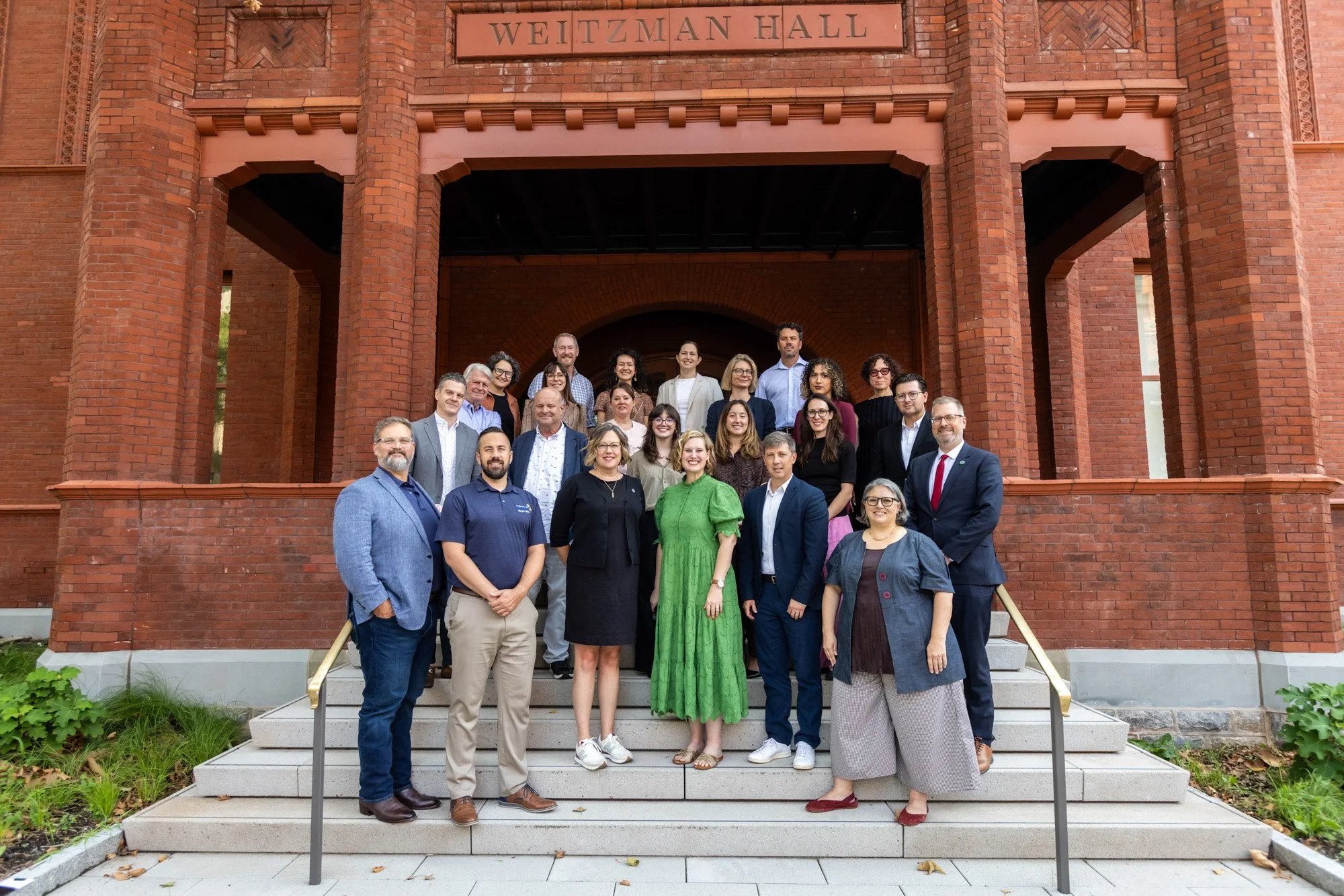
Photos by Marenco Photo for University of Pennsylvania
Columbus, Indiana — Richard McCoy, founding executive director of Landmark Columbus Foundation (LCF), served on the Resource Team for a special session of the Mayors’ Institute on City Design (MICD) in Philadelphia this month, joining a national exchange on how cities make design decisions that endure. The session comes as LCF prepares to host Prove It: A National Summit on Design Excellence as Civic Practice in Columbus this October.
Held August 12–14, and hosted by the University of Pennsylvania Weitzman School of Design and the McHarg Center for Urbanism and Ecology, the session brought together seven mayors from across the country with seven experts in architecture, landscape architecture, arts and culture, transportation, urban planning, urban design, and economic development. Over two and a half days, the group worked collaboratively on pressing design and development challenges facing the participating cities, exploring how thoughtful decisions about the built environment can strengthen public space, neighborhoods, economic development, and civic life.
Hosted by Philadelphia Mayor Cherelle Parker, the session convened mayors from seven cities: Mindy O'Neall of Fairbanks, Alaska; Julie Sayers of Lenexa, Kansas; Kyle Schlachter of Littleton, Colorado; Gina-Louise Sciarra of Northampton, Massachusetts; Allan Branch of Panama City, Florida; Mike McGuinness of Pontiac, Michigan; and Jake Wilson of Somerville, Massachusetts. Each mayor presented a design or development challenge from their city and received feedback from the Resource Team and fellow mayors.
This October, LCF will convene Prove It: A National Summit on Design Excellence as Civic Practice in Columbus, Indiana, bringing civic leaders, practitioners, researchers, funders, and partner communities together to test a central proposition: that design excellence can be defined, measured, and practiced by communities committed to strengthening the quality of place. The Summit will build on exchanges like MICD by positioning Columbus as a place where communities can learn from one another, test ideas in public, and develop shared knowledge about how better civic decisions can endure over time. Program and participant details will be announced in September at civicdesigninstitute.org.
"Every mayor in this session faced a version of the question Columbus has been answering for seven decades: how does a community make good decisions about its built environment, and how does it make them endure for long-term public benefit," McCoy said. "I brought Indiana experience to Philadelphia, but I also brought home a sharper sense of what we still have to prove, and that is exactly the work we will take up at the Summit this October."
McCoy joined experts from Hood Design Studio, HR&A, the City of Knoxville, the City of Oakland Department of Transportation, Buro Happold, and Gensler. Together, the Resource Team provided mayors with multidisciplinary perspectives on projects ranging from new public spaces and infill development to district identity, connections to nature, and strategies for maximizing the long-term benefits of public investment.
McCoy’s participation reflects LCF’s growing work to position design excellence as a civic practice: a discipline of making decisions about the built environment with rigor, care, and accountability to the long-term public good. Columbus’ internationally recognized design legacy provides a distinctive foundation for that work, demonstrating what can happen when a community sustains high expectations for its public realm across generations.
Participation in MICD also provides an opportunity for LCF to learn alongside communities working under very different circumstances. Rather than presenting Columbus as a model to replicate, McCoy brought the city’s experience into a national exchange about the civic conditions that allow thoughtful design decisions to endure: strong institutions, public trust, shared meaning, vibrant everyday public life, and long-term investment in place.
The Philadelphia session comes as Landmark Columbus Foundation expands this national conversation through its Civic Design Institute, the organization’s platform for advancing design excellence as civic practice through research, convenings, partnerships, and publications.
The Mayors’ Institute on City Design is a leadership initiative of the National Endowment for the Arts in partnership with the United States Conference of Mayors. Since 1986, MICD has prepared mayors to serve as the chief urban designers of their cities, using design as a tool for addressing complex civic challenges and improving residents’ lives.
To view photos of the session, visit this link.
Media Contact
Jamie Goldsborough
jamie@landmarkcolumbus.org
About Landmark Columbus Foundation
Landmark Columbus Foundation (LCF) exists to demonstrate what design excellence can mean to a community, earned through discipline, proven in public, and cared for as a legacy for the future. landmarkcolumbusfoundation.org
About Civic Design Institute
Civic Design Institute is Landmark Columbus Foundation's platform for advancing design excellence as civic practice. Through research, convenings, partnerships, and publications, the Institute develops shared knowledge about how communities make and sustain better decisions about the built environment. civicdesigninstitute.org