
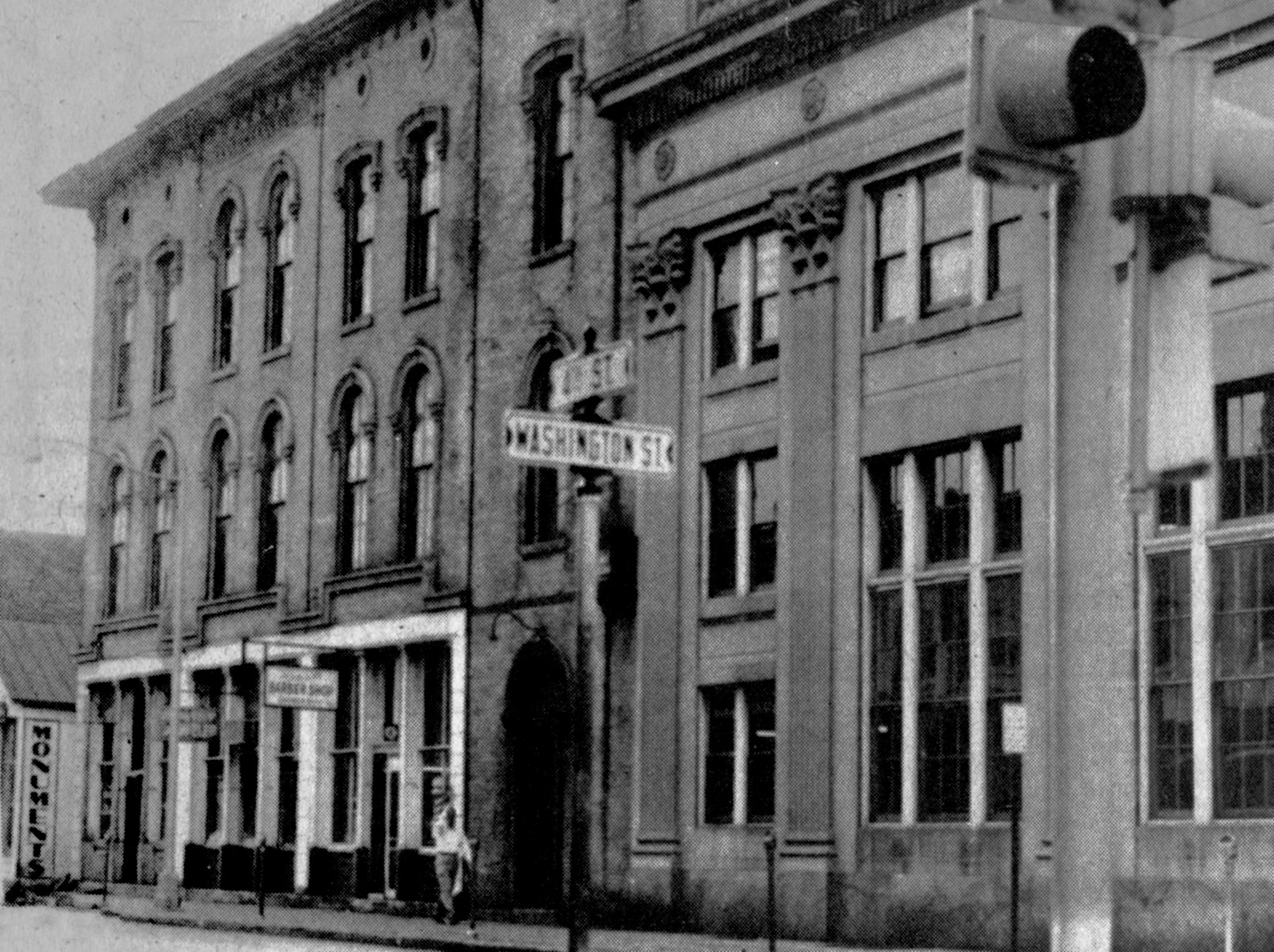
The Goins Hotel
How architectural research reconstructed one of Columbus' most important Black historic places.
Summary
The Goins Hotel no longer exists, and very little visual evidence survives. Through historical research, archival records, architectural analysis, and digital reconstruction, Landmark Columbus Foundation sought to better understand one of the most important Black historic places in Columbus and recover a building that had largely disappeared from public memory.

A bronze marker within the sidewalk along 4th Street locates what would be the entrance to the former Goins Hotel building.
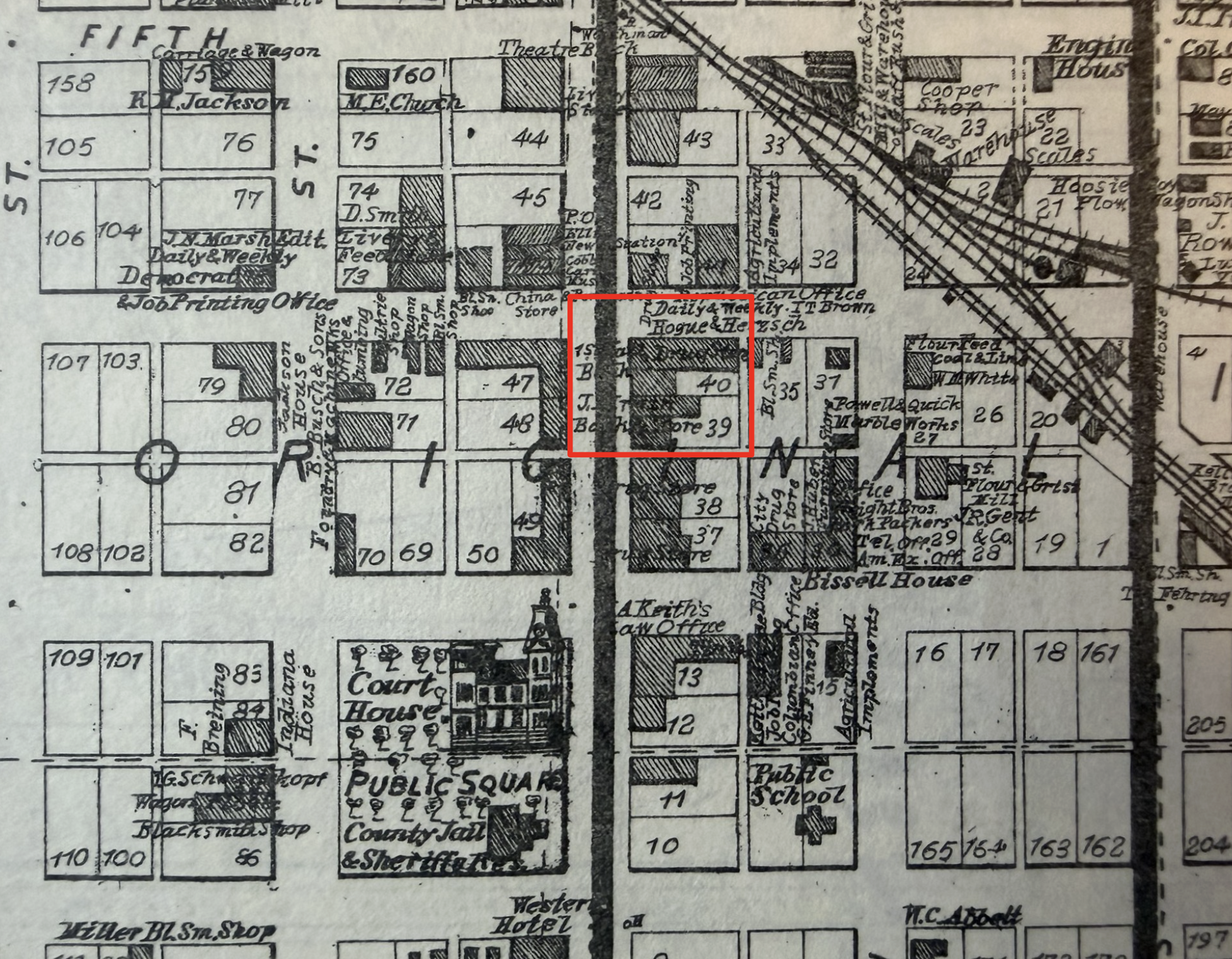
1879 Illustrated Historical Atlas of Bartholomew County showing the future location of the Goins Hotel. Randolph Griffith and Francis Crump's First National Bank initiated development of the building that would later become the Goins Hotel (#40).
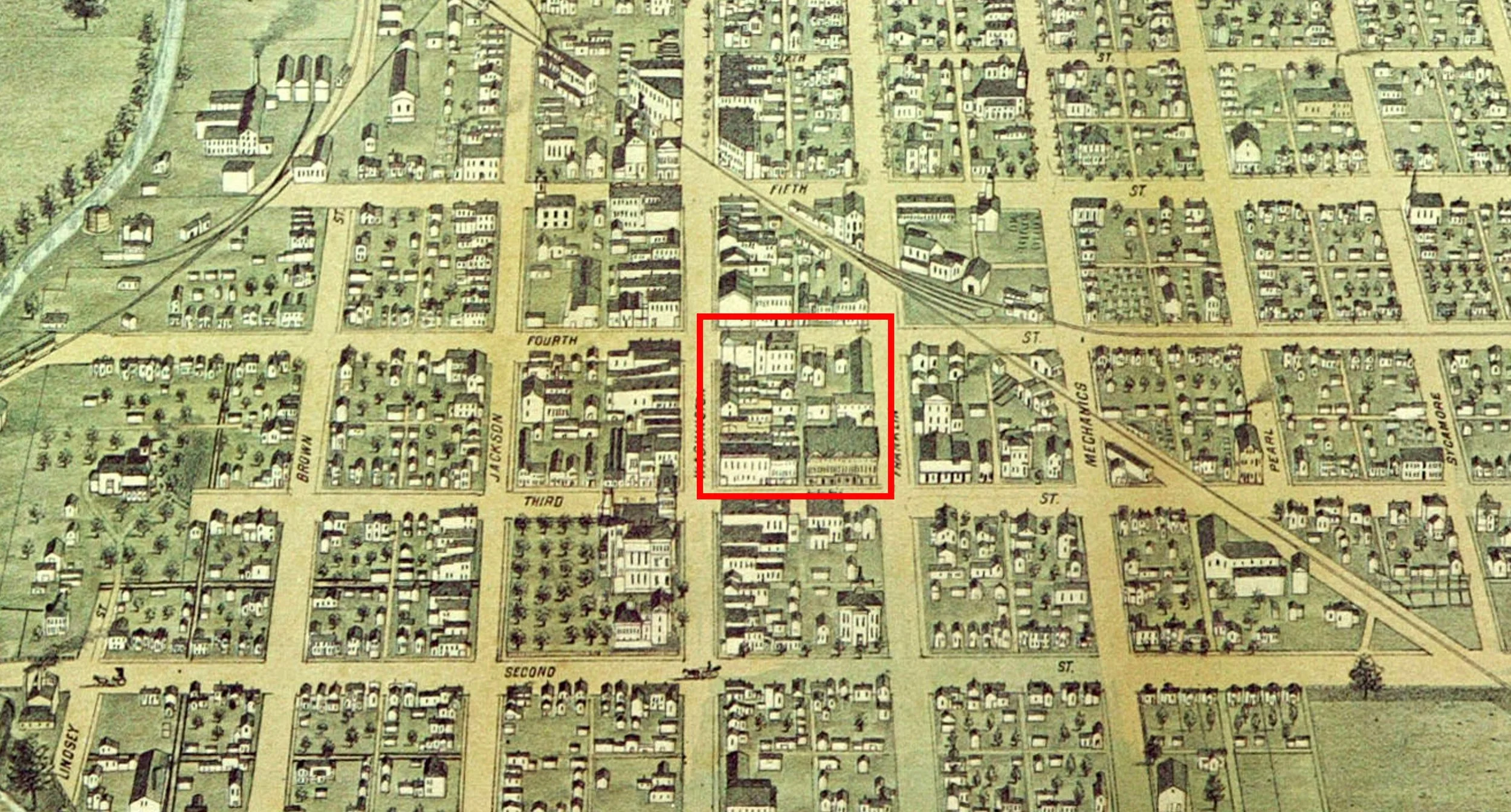
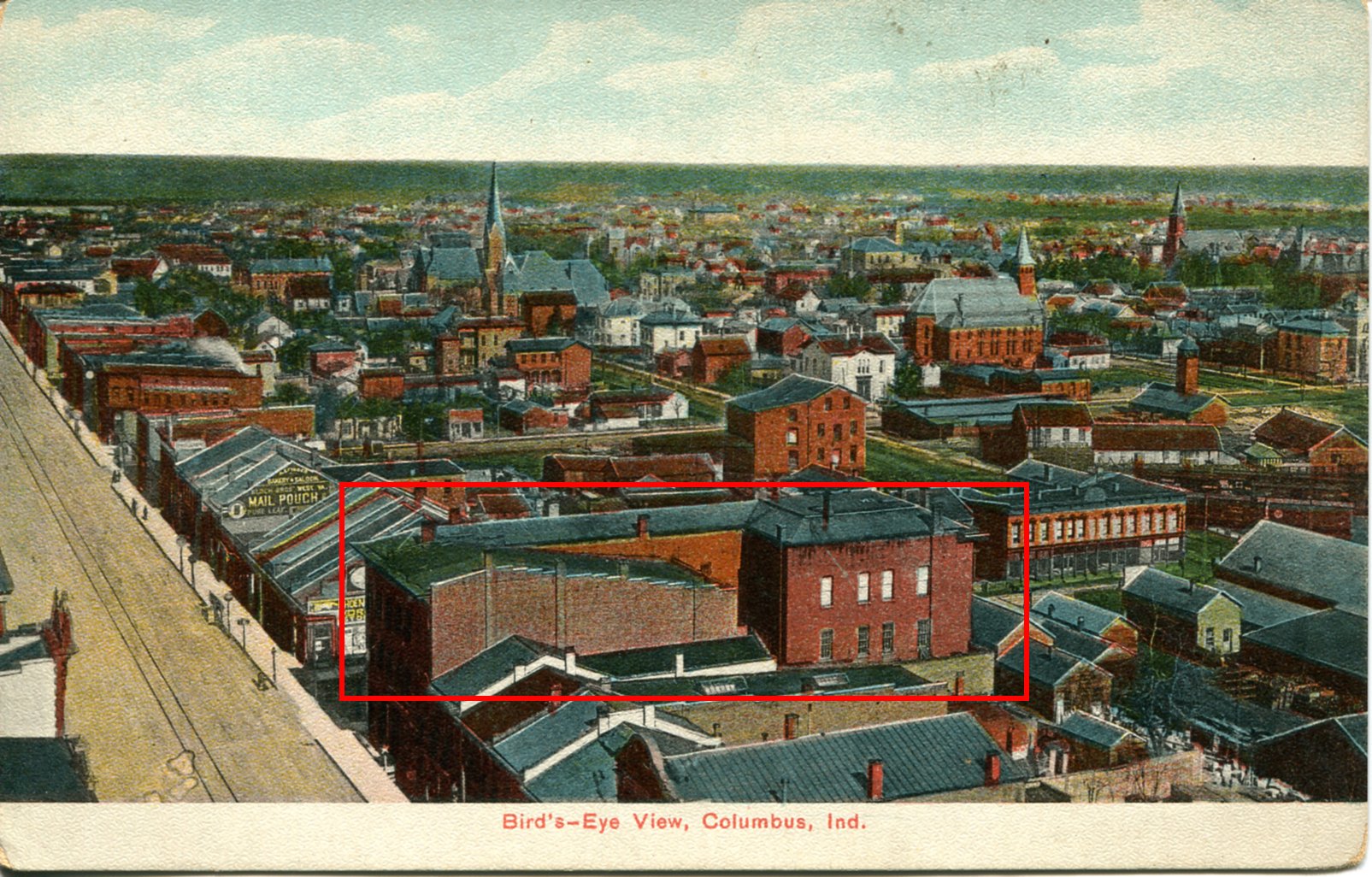
A birds-eye view of Columbus in 18xx. A red outline denotes the block between 4th Street and Washington Street, where the Goins Hotel once stood.
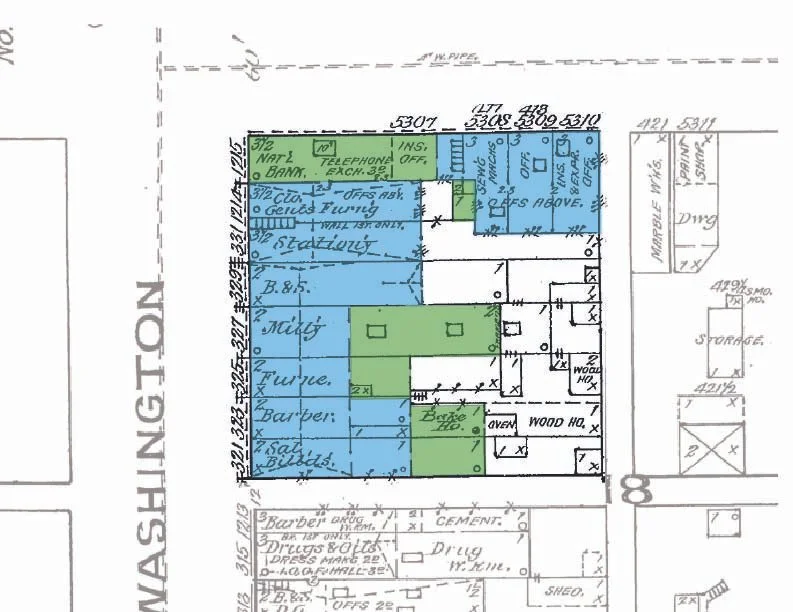
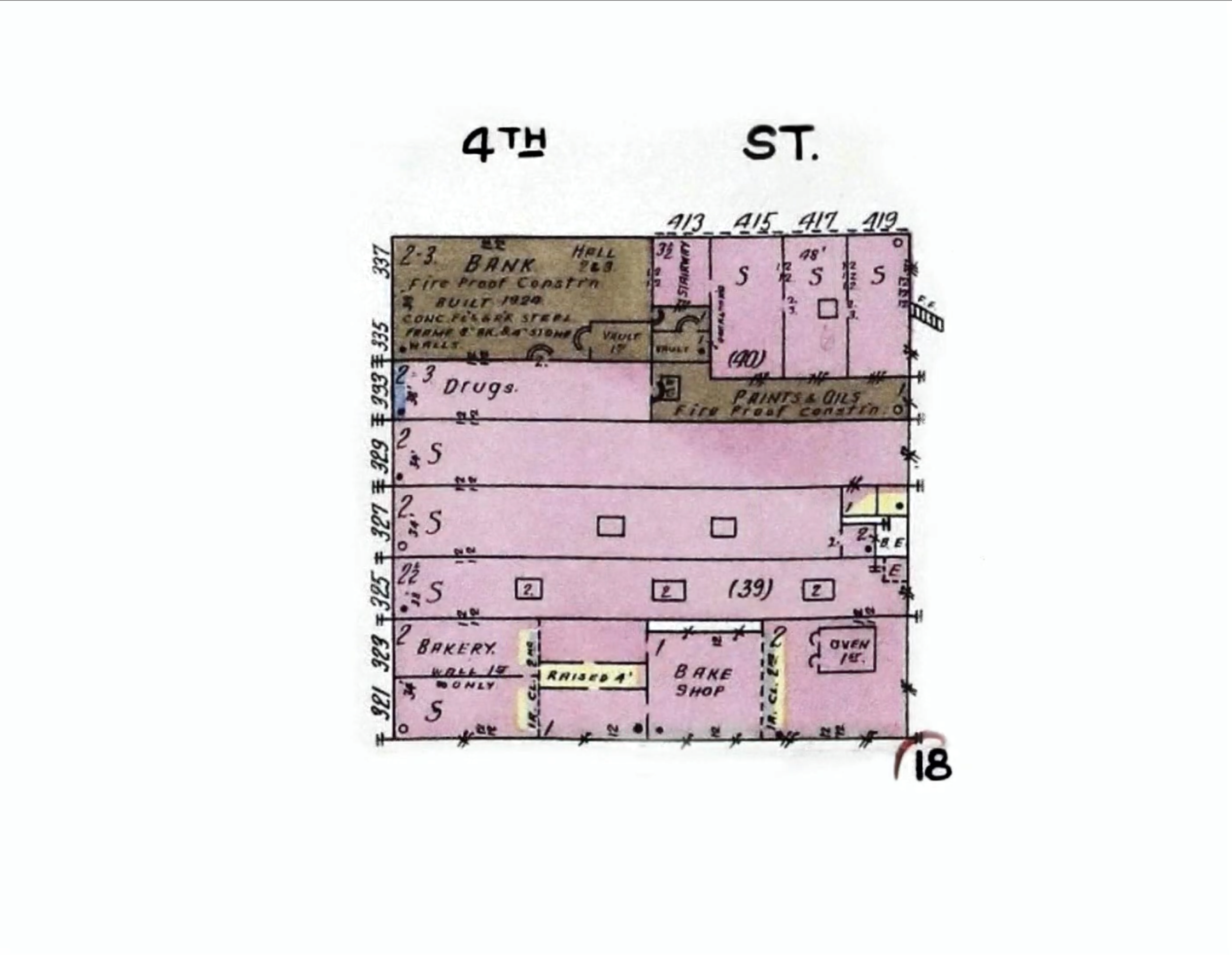
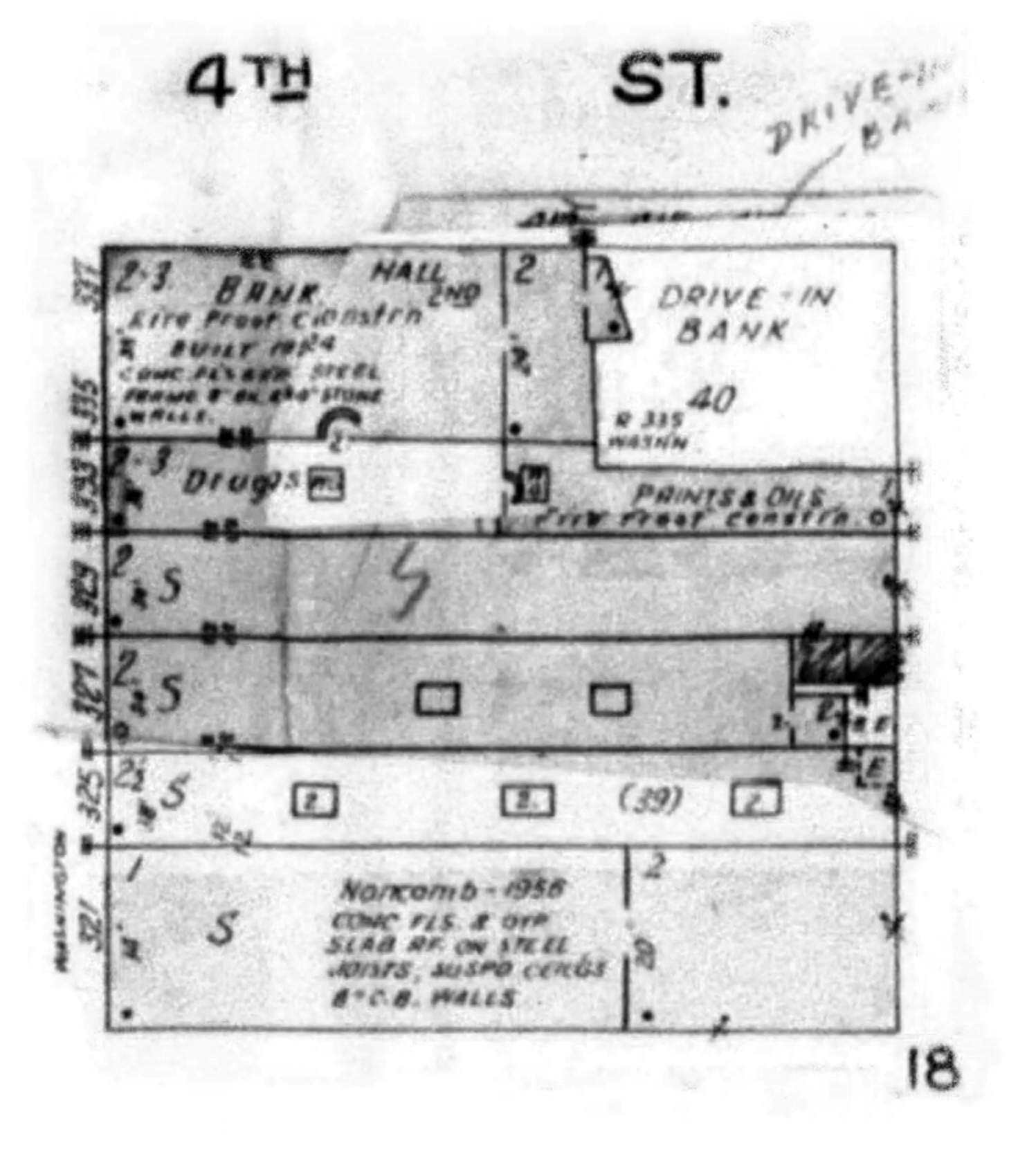
This 1886 Sanborn Fire Insurance Map documents the building's early evolution. Color coding distinguishes successive phases of construction, revealing how the original bank building expanded through multiple additions before eventually becoming home to the Goins Hotel.
Introduction
Very little remains of the Goins Hotel today.
For nearly two decades, Elmer and Lydia Goins operated a 23-room hotel on Fourth Street that provided lodging, community, and refuge for Black travelers and residents during segregation. Although the hotel occupied an important place in Columbus' Black history, the building was demolished in the late 1950s, leaving behind only fragments of its physical record and a small number of photographs.
The story of the Goins Hotel, however, begins long before the Goins family.
In March 1865, agricultural entrepreneur and prominent businessman Randolph Griffith joined civic leader Francis Crump in organizing First National Bank of Columbus. The new institution commissioned the construction of a commercial building at the southwest corner of Washington and Fourth Streets—a building that, over the next six decades, would grow through multiple additions before eventually becoming home to the Goins Hotel. Property records indicate construction was completed by 1869, though the building continued to evolve throughout the late nineteenth century.
Combining community history preserved by Paulette Roberts with archival research, Sanborn Fire Insurance Maps, historic photographs, newspapers, property records, and architectural analysis conducted by Cameryn Kent, this project reconstructs both the history of the Goins Hotel and the building itself. Together, these forms of evidence demonstrate how architectural research can become a tool for preserving cultural memory.
A Place of Safety and Community
The story of the Goins Hotel cannot be separated from the history of Black life in southern Indiana.
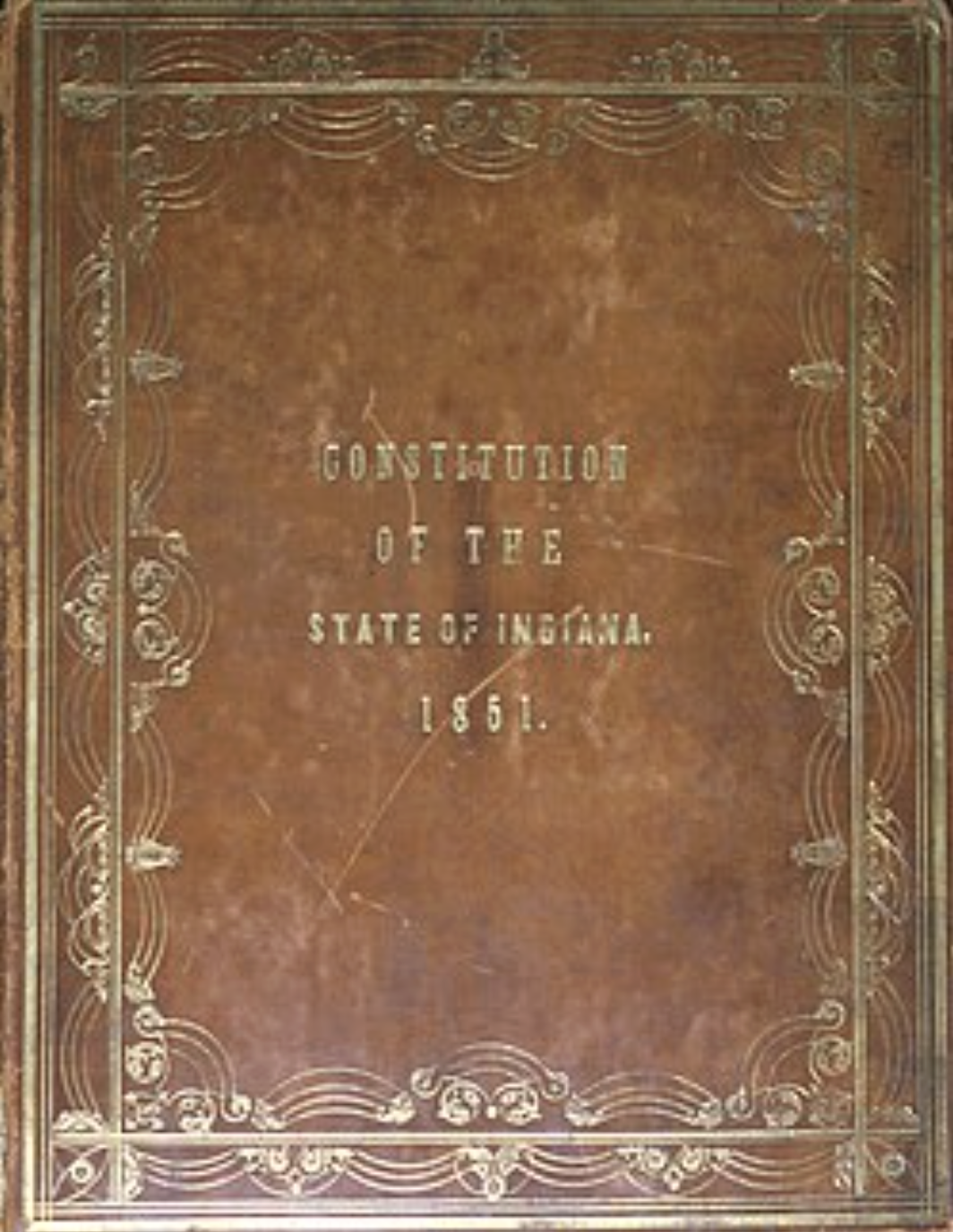
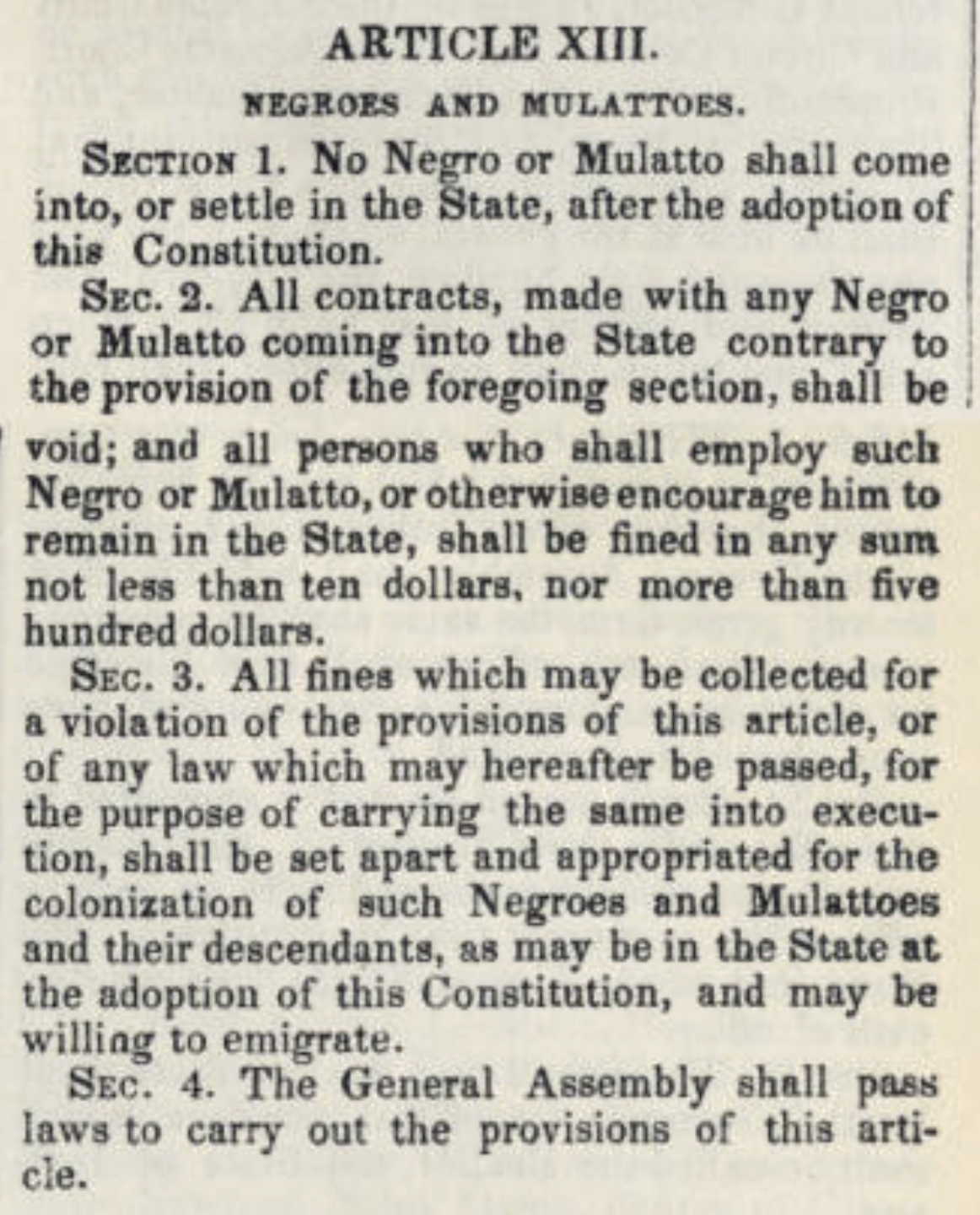
Although Indiana entered the Union as a free state, Article XIII of the 1851 Indiana Constitution prohibited Black people from settling in the state until the provision was repealed following the Civil War. Historians have therefore described Indiana during much of the nineteenth century as a "contested territory," where legal freedom often existed alongside exclusion and discrimination.
Elmer Goins arrived in Columbus around 1900 after graduating from Greensburg High School and earning a teaching license. Although widely known for shining shoes in downtown Columbus for more than fifty years, he and his wife Lydia Jenkins Goins established one of the city's most important Black-owned institutions. Married in 1904, the couple opened the Goins Hotel in 1928, creating one of the few places in Columbus where Black travelers could find lodging and where Black residents could gather, organize, and build community.
The hotel was far more than a place to stay. During an era when segregation and discrimination denied Black residents equal access to many public accommodations and institutions, the Goins Hotel became a place where essential aspects of community life could continue. It welcomed Black travelers who had few lodging options, provided meeting space for civic organizations, and hosted social gatherings, celebrations, and community meals.
Historical accounts also suggest the hotel served important caregiving functions. Residents recovering from illness or injury stayed at the hotel for extended periods, and newspaper accounts indicate that portions of the building were once quarantined during an outbreak of whooping cough. While not a hospital in the formal sense, the Goins Hotel adapted to meet the needs of its community by offering care and shelter, becoming one of many Black-led institutions that emerged to provide services and support unavailable elsewhere during segregation.
Newspaper accounts reveal a vibrant social life within the hotel as well. A 1928 article in The Indianapolis Recorder describes a four-course birthday dinner held in the hotel's dining room, noting its beautifully appointed tables adorned with flowers in silver vases and guests from both Columbus and Bloomington. Such moments remind us that the Goins Hotel was not defined solely by the hardships of segregation, but also by fellowship, hospitality, and celebration. Together, these roles made the Goins Hotel one of the most important centers of Black civic life in Columbus.
The Building Before the Hotel
Long before Elmer and Lydia Goins operated the hotel, the building reflected the commercial growth of downtown Columbus.
Evidence from property deeds, Sanborn Fire Insurance Maps, historic atlases, and photographs suggests the structure expanded gradually through multiple phases of construction rather than being built all at once.
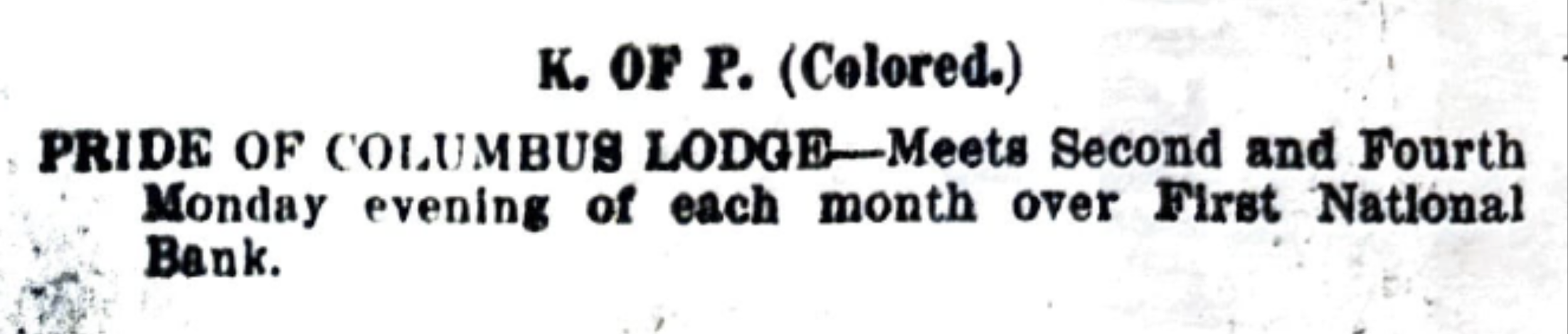
Architect Charles F. Sparrell renovated portions of the building in 1884. By 1907, the upper floors had become home to the Colored Knights of Pythias (CKoP), one of the nation's largest Black fraternal organizations. Founded on principles of friendship, mutual aid, and economic support, the CKoP provided members with financial assistance, insurance, and a measure of economic security at a time when Black residents were routinely denied access to many white-owned banks and other financial institutions. In many communities, organizations such as the CKoP functioned as informal systems of mutual aid, pooling resources to help members during illness, hardship, and times of need.
The CKoP continued meeting in the building after the Goins Hotel opened, suggesting a continuity of Black civic life on the site rather than two separate chapters in its history. Long before the Goins Hotel welcomed travelers, the building had already become a place where Black residents gathered, organized, supported one another, and built community.


Recovering a Lost Building
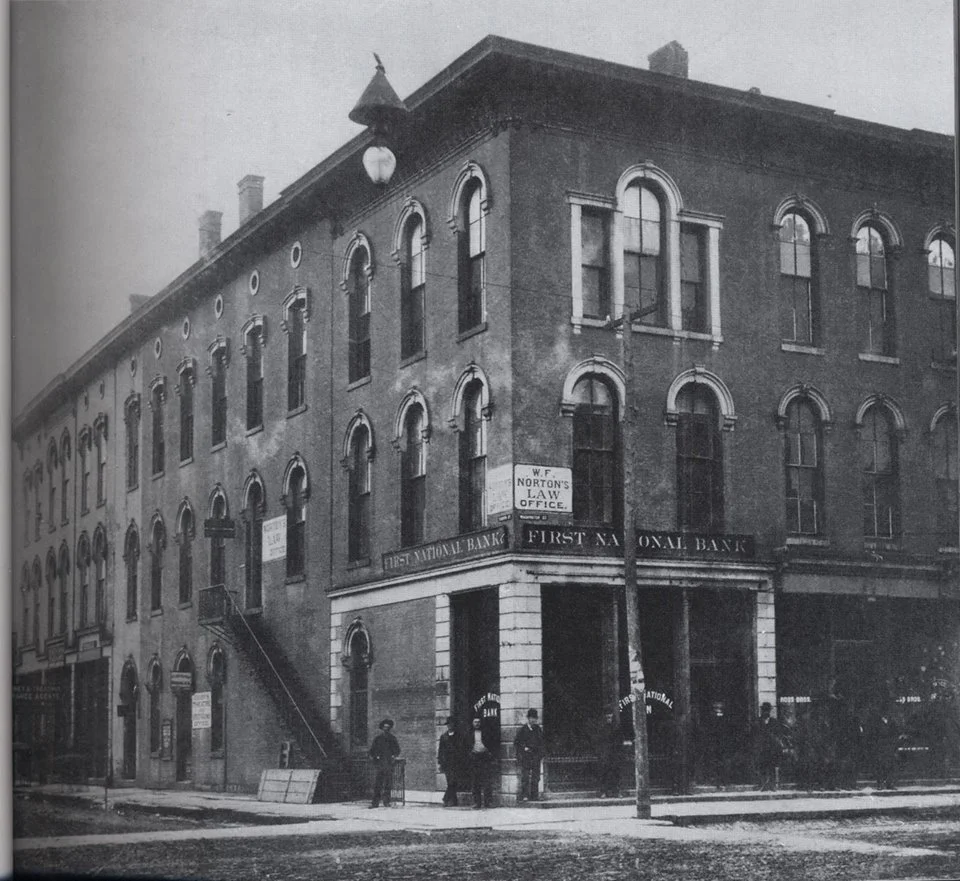
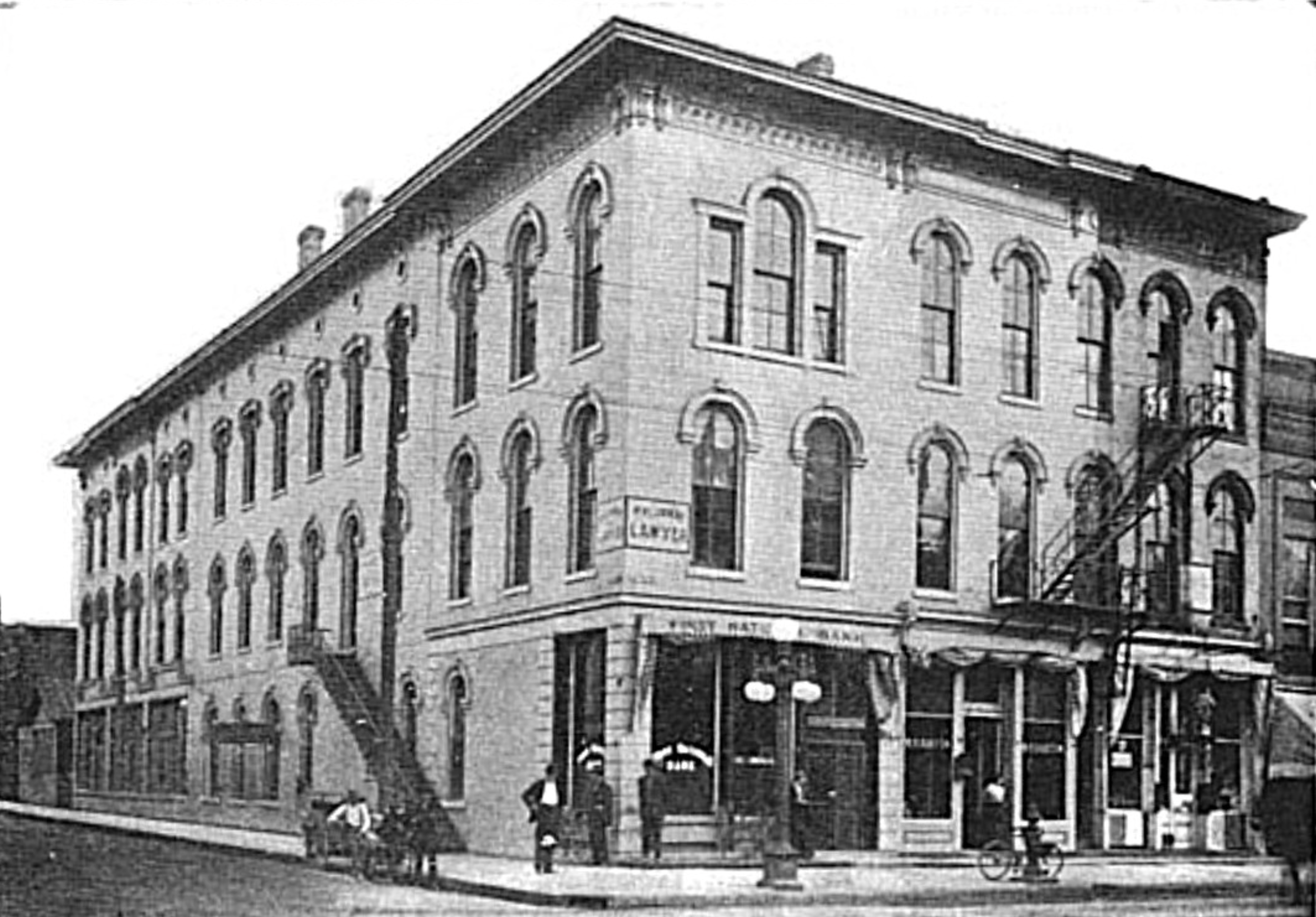
Unlike other historic buildings in Columbus, the Goins Hotel left behind remarkably little visual documentation.
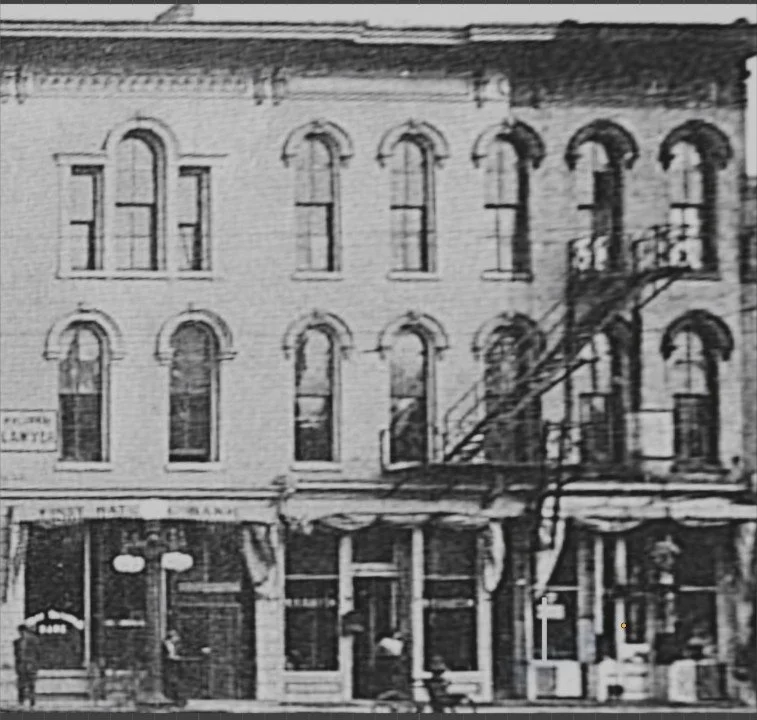
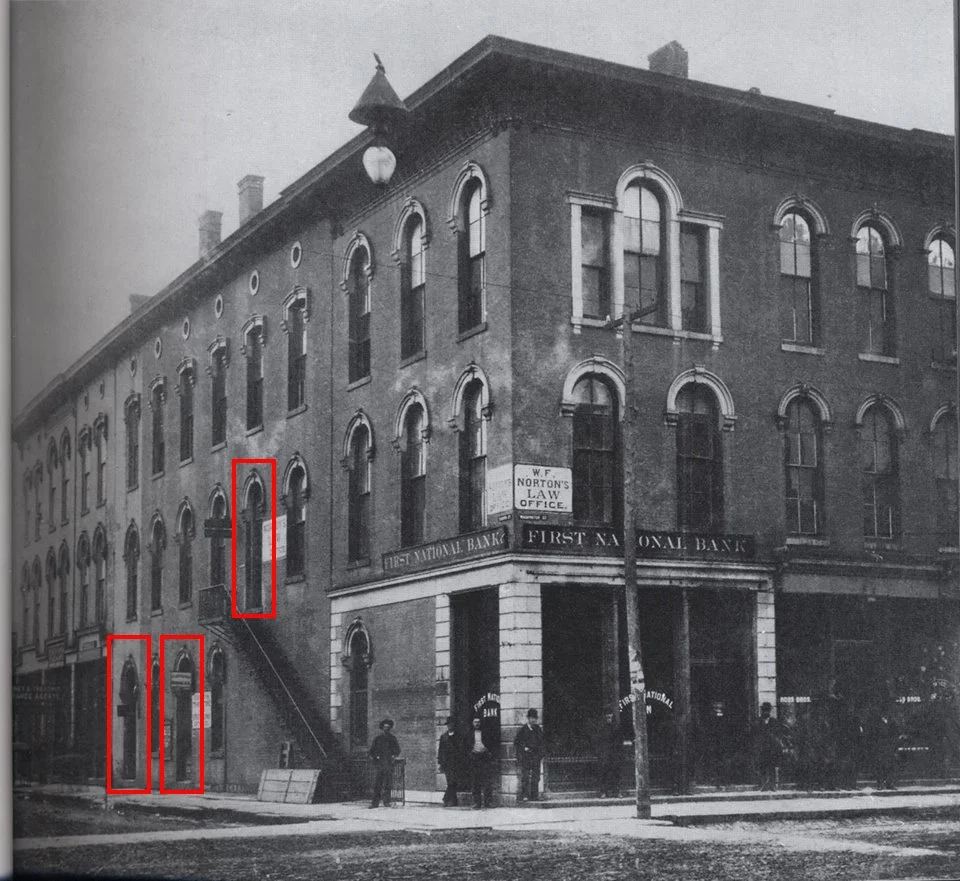
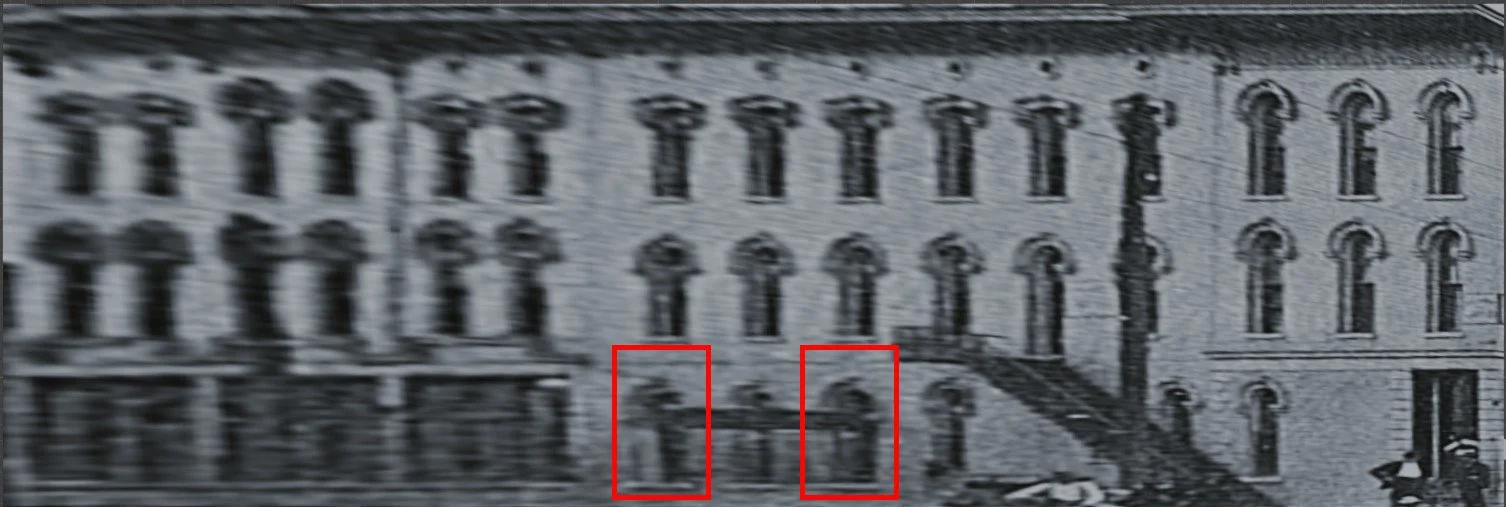
Only a handful of photographs survive, each taken from oblique angles that reveal only portions of the building. No known architectural drawings have been found.
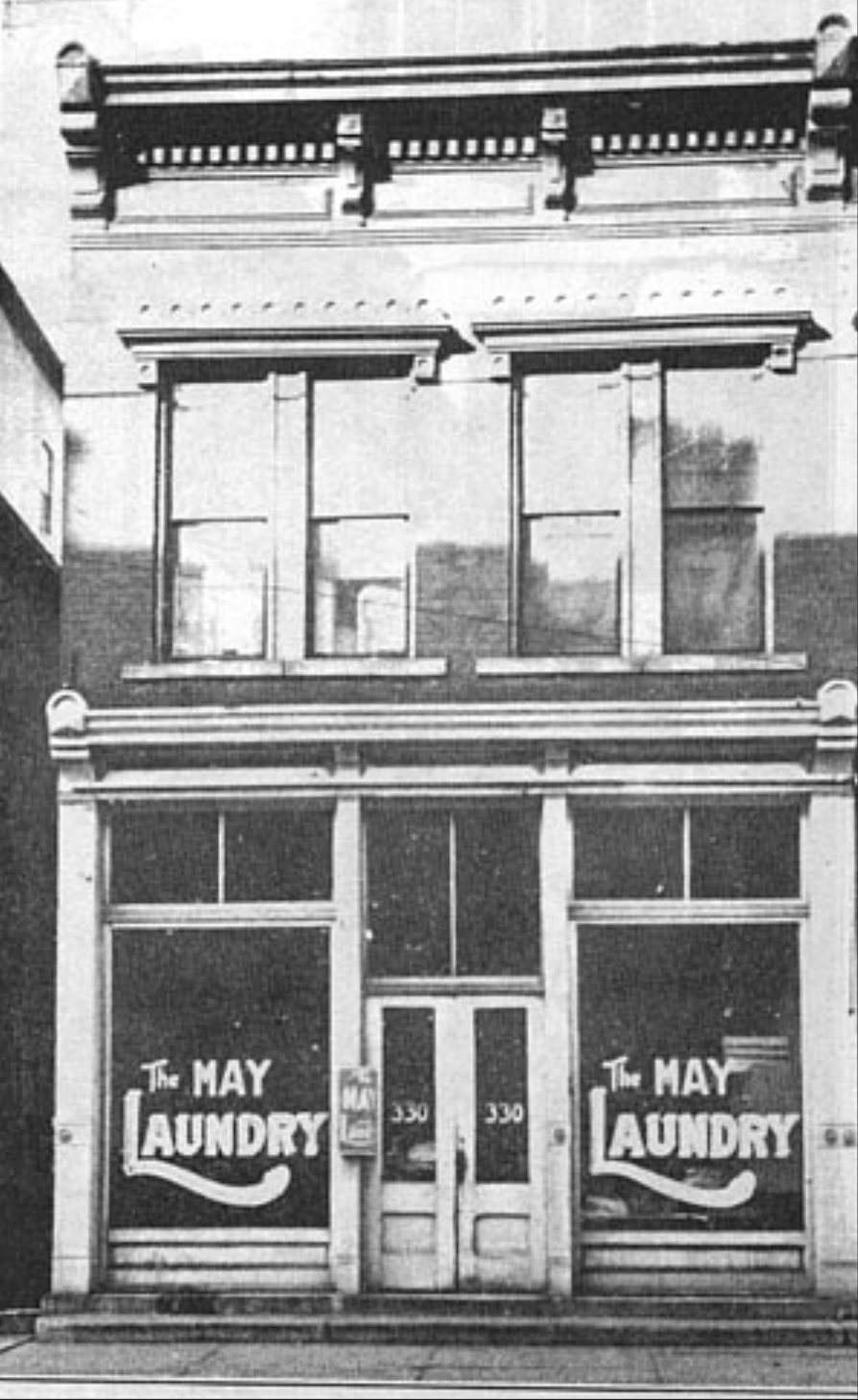
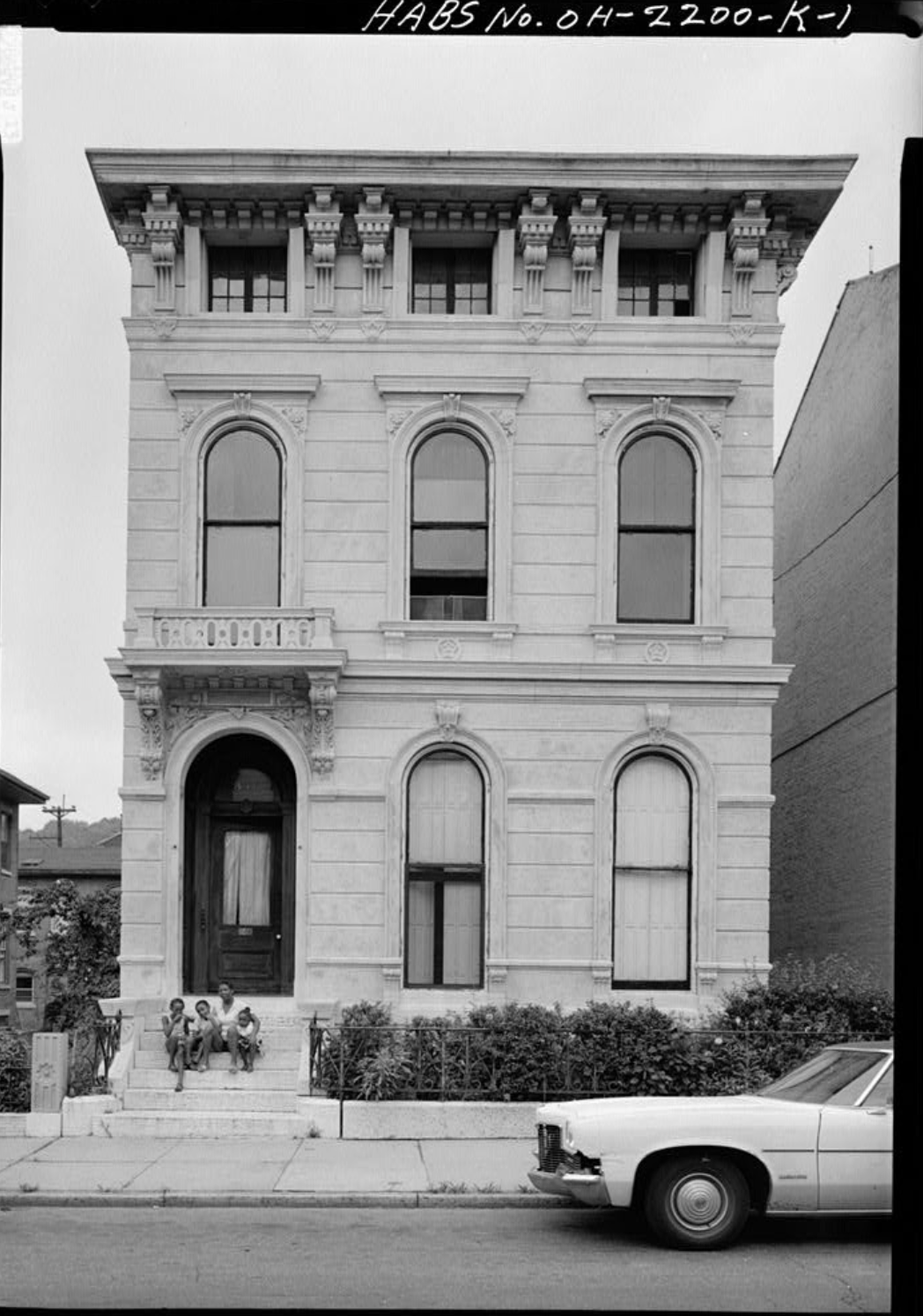
To better understand the building, researchers combined multiple forms of evidence, including property deeds, Sanborn Fire Insurance Maps, city directories, newspapers, bird's-eye maps, archival photographs, and architectural comparison with other Italianate commercial buildings of the same period.
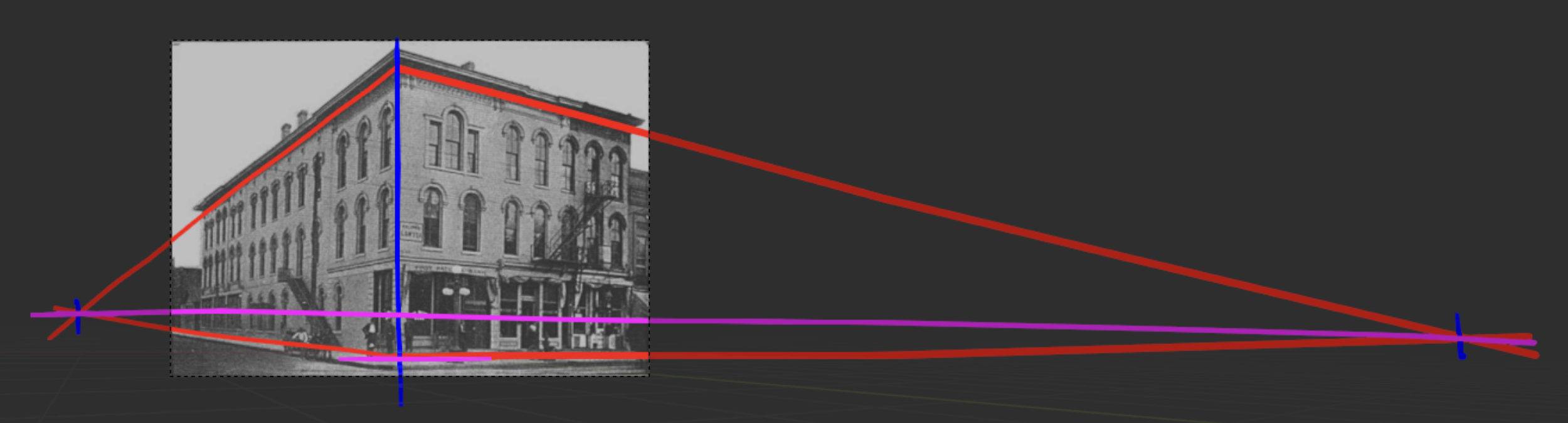
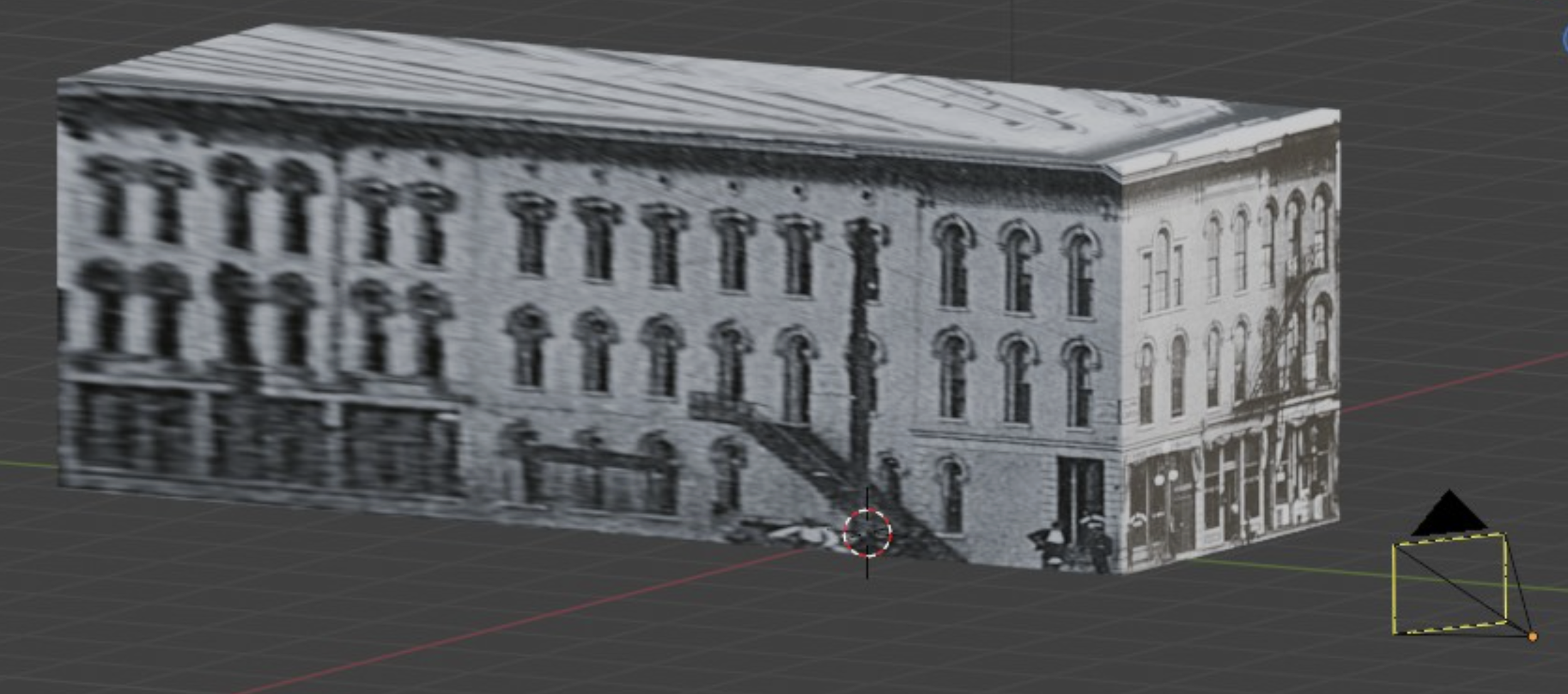
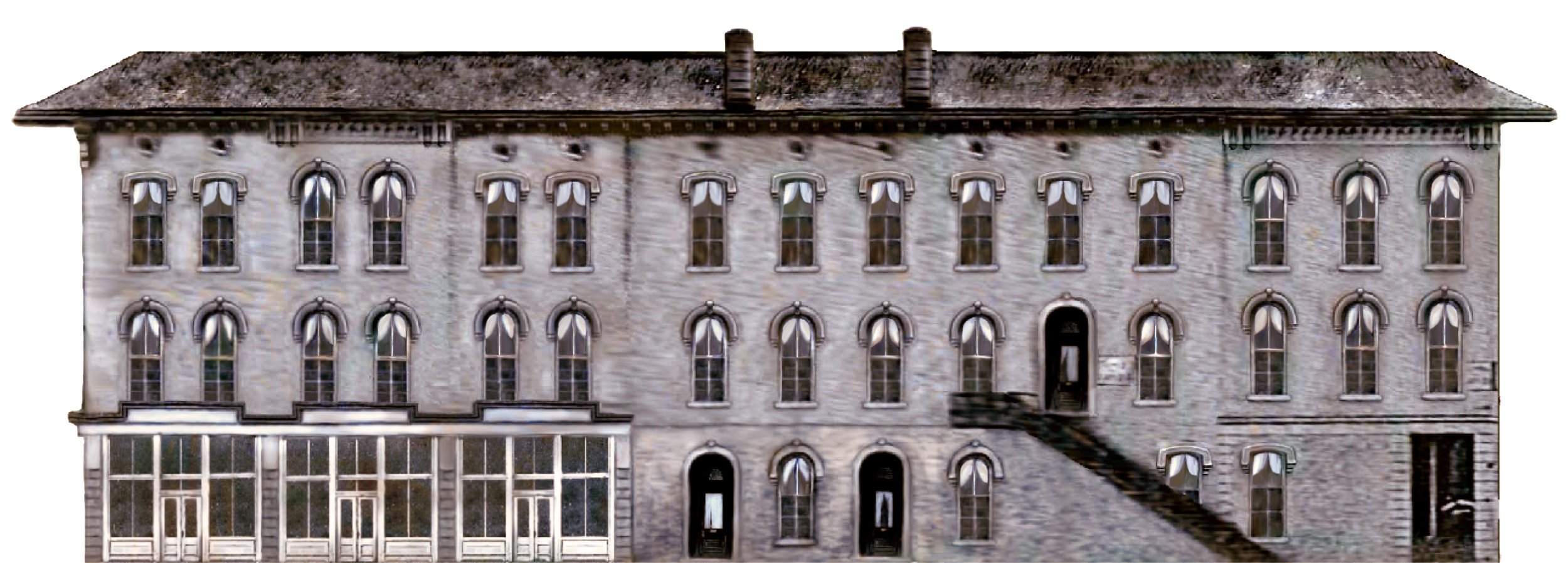
Historic photographs were digitally corrected by reconstructing the original camera perspective. Through three-dimensional modeling and architectural analysis, distorted street photographs could be viewed as orthographic elevations; allowing windows, entrances, masonry patterns, and building proportions to be studied at a consistent scale.
Rather than producing a speculative illustration, the reconstruction remains grounded in available evidence. Where historic documentation was incomplete, architectural features were interpreted conservatively using comparable nineteenth-century commercial buildings while avoiding assumptions unsupported by research. The resulting reconstruction serves as a working research document that can continue to evolve as new evidence is discovered.

Architecture and Black Civic Life
The architectural history of the building also reveals changing social conditions in Columbus.
During the 1920s, Indiana experienced one of the highest rates of Ku Klux Klan membership in the nation, and the organization held significant political influence throughout the state, including Columbus.
Against this backdrop, the Goins Hotel occupied upper floors entered from Fourth Street rather than prominently facing Washington Street. While the reasons for this arrangement cannot be conclusively documented, the building's organization invites consideration of how architecture, circulation, and visibility shaped experiences of safety and belonging for Black residents during segregation.
A major renovation of First National Bank in 1925 further transformed the site. The bank adopted the limestone façade that remains today while much of the older Italianate commercial block continued to stand along Fourth Street. This architectural separation unintentionally created a degree of visual privacy for the hotel and the Black civic organizations that continued to occupy the upper floors.
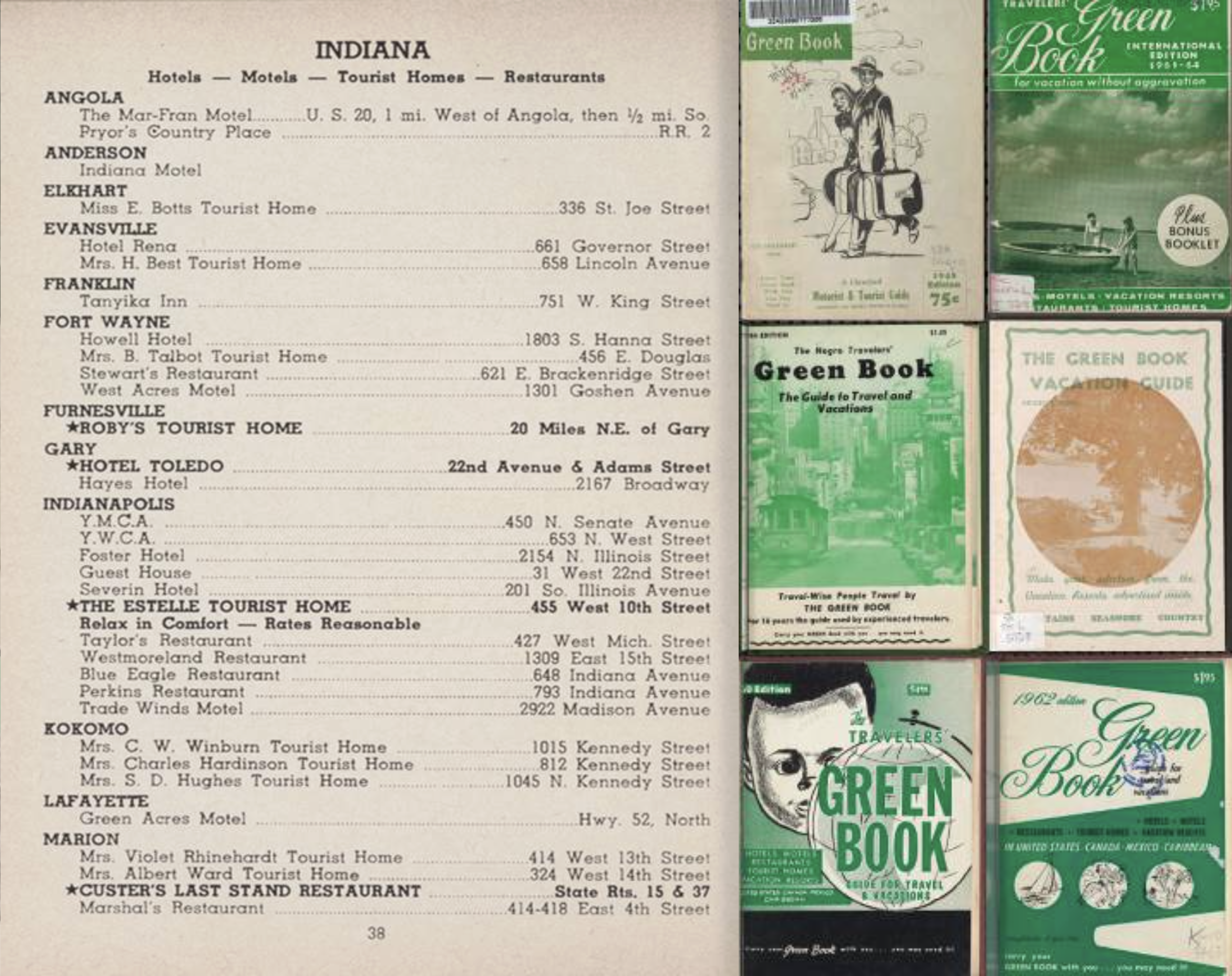
The Goins Hotel itself was never listed in The Negro Motorist Green Book, which documented safe accommodations for Black travelers throughout the United States. Columbus was not among the seventeen Indiana communities included in the guide, reflecting both the city's relatively small Black population and the limited public infrastructure available to Black travelers during segregation.

Loss and Memory
The success of the Goins Hotel was accompanied by continual challenges.
For decades, Elmer Goins struggled to maintain an aging building while facing barriers to insurance and investment. A fire in 1944 reportedly required Goins himself to extinguish the flames after firefighters failed to respond effectively. Lydia Goins died in 1945, and the hotel closed the following year.
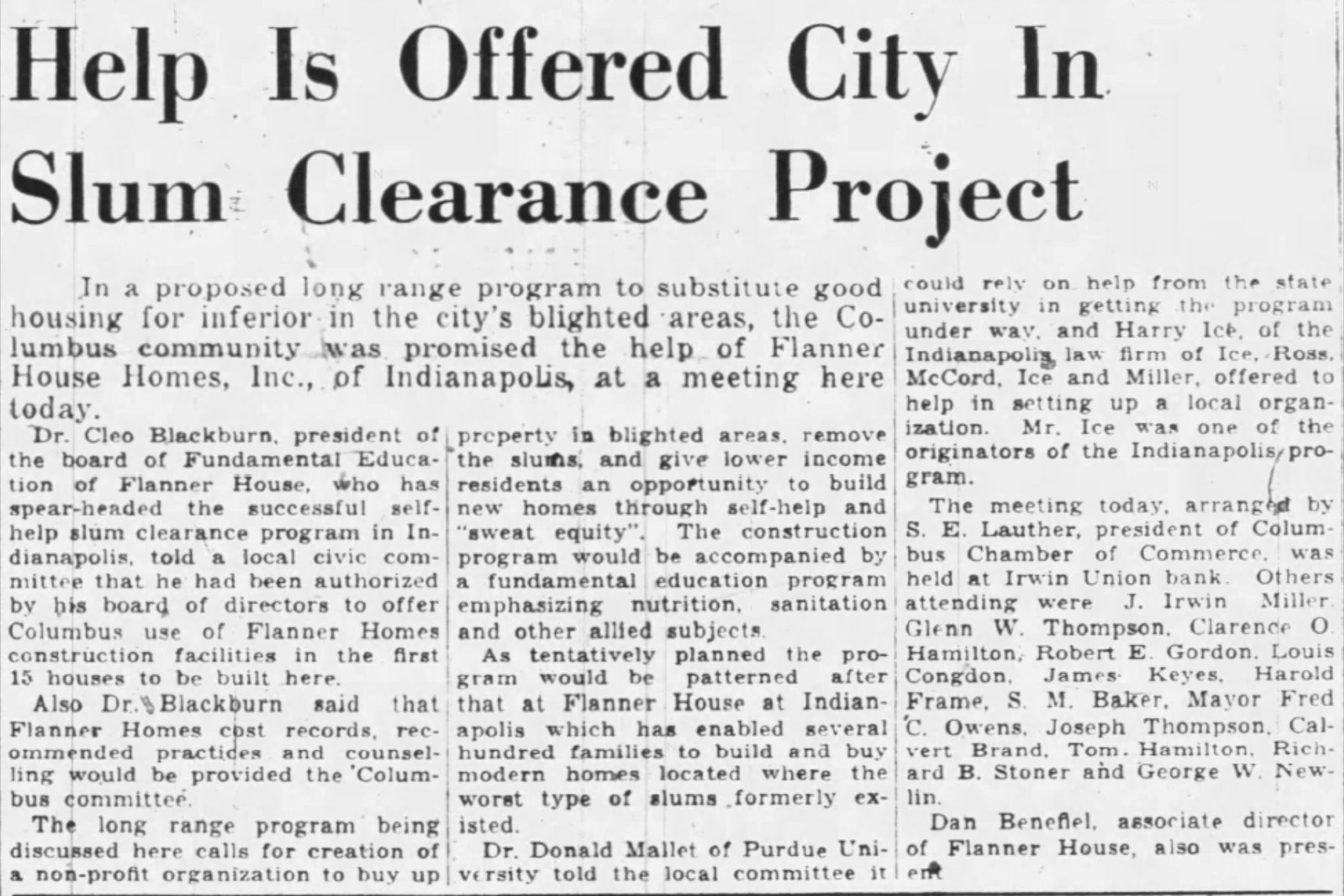
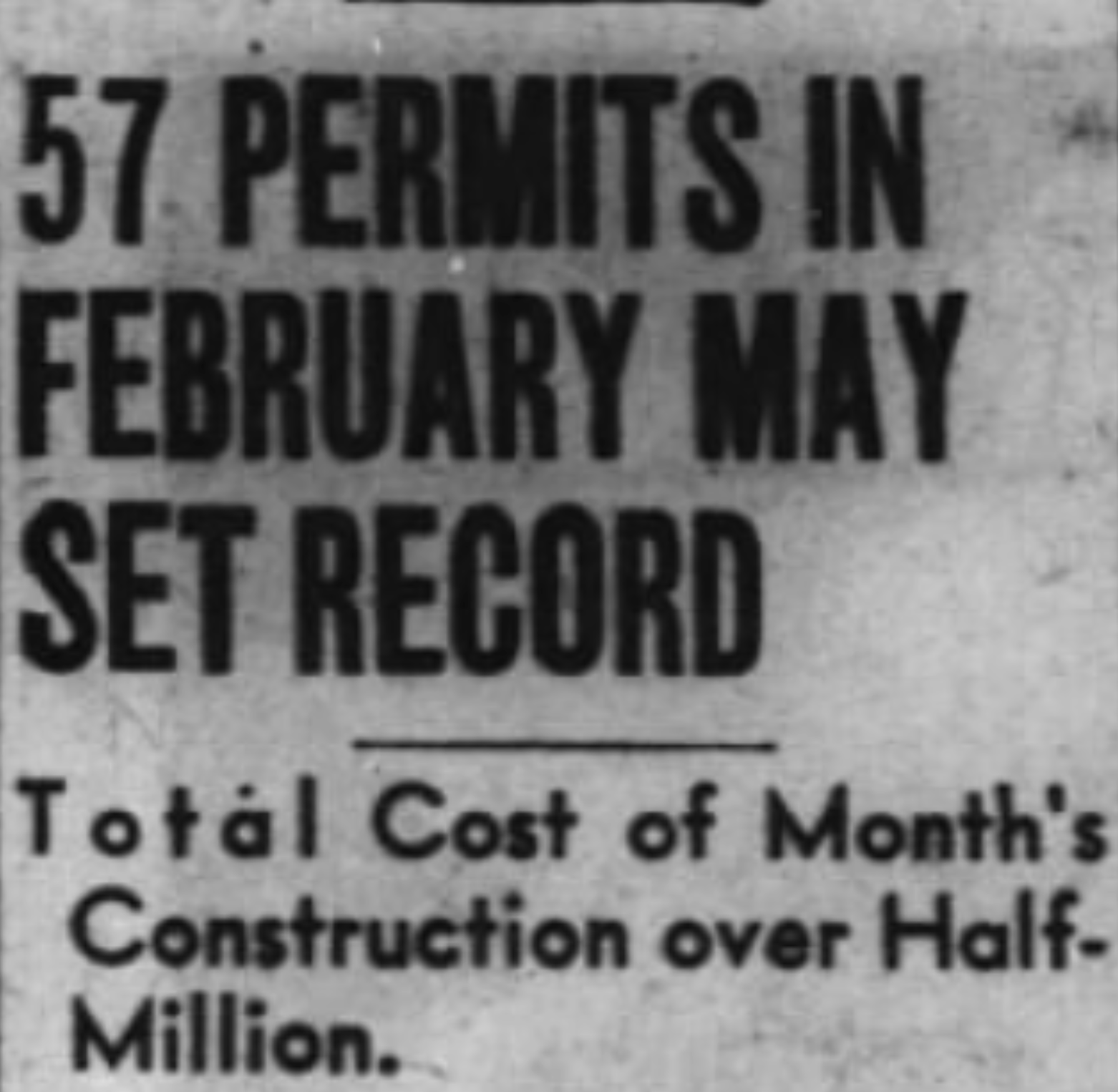
In 1957, much of the building was demolished during downtown redevelopment and replaced with an expansion of First National Bank. The demolition coincided with a broader era of postwar urban renewal, when redevelopment often overlooked or erased places significant to Black communities throughout the United States.
Although the building disappeared from the streetscape, its significance did not.
Preservation Through Research
Following the hotel's demolition, the site continued to change. The bank's drive-up facilities eventually replaced much of the former hotel footprint, and after the drive-up ATM was later removed, the property became a small, tree-covered remnant at the edge of downtown. More recently, the building's current owner, Ovation Technology Group, transformed the site once again, creating a small public plaza that reopened the corner for civic use, colloquially known as “Ovation Plaza.”
That renewed public life became an unexpected continuation of the site's history.
In 2023, the plaza served as the home of A Carousel for Columbus, commissioned as part of Exhibit Columbus Public by Design. Two years later, the site welcomed Apart, Together by Suzanne Letteri and Michael Jefferson, commissioned for Exhibit Columbus Yes And.
During the exhibition run of A Carousel for Columbus, the Office of Downtown Development launched a successful summer jazz series at Ovation Plaza. The crowd overflowed along 4th Street, transforming the former hotel site into a place where residents once again gathered for community activity.
Preservation continues—not through the reconstruction of brick and mortar, but through the careful recovery of knowledge. Maps, photographs, property records, newspapers, architectural analysis, and community memory together reconstruct a place whose civic importance demands acknowledgment in Columbus’ history.
By bringing together the historical research of Paulette Roberts and the architectural investigation of Cameryn Kent, this work seeks not only to document a lost building but to make its significance visible. Although the Goins Hotel no longer stands, the site continues to evolve as a place of gathering, culture, and public life. Its history reminds us that preserving cultural heritage is not only about remembering what once existed, but also about understanding how places continue to shape a community across generations.
Goins Hotel Research Team
Historical Research Paulette Roberts
Historical Documentation Bartholomew County Historical Society
Architectural Research & Building Reconstruction Cameryn Kent
Editorial Direction Jamie Goldsborough
Oral histories with Paulette Roberts
Anna Bedell King (1970s);
Alan Wayne Smith, Sr. (1980s), AWS stayed at the Goins Hotel as a child;
Shirley Eileen Smith Handley (2010s).
About this Research
The Goins Hotel is a site along the Black Heritage Trail.
This publication is part of the Black Heritage Trail Research Series, an ongoing initiative to document, interpret, and share the histories of places significant to the Black experience in Columbus and Bartholomew County. The series combines community knowledge, archival research, architectural investigation, and public storytelling to recover oppressed histories and to strengthen understanding of the community's shared cultural heritage.